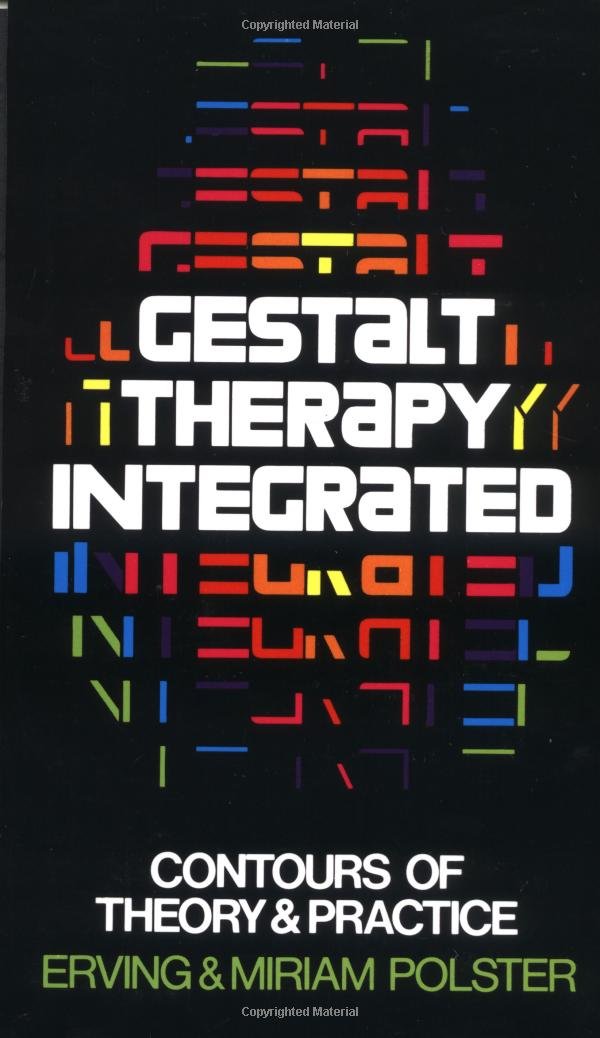
Gestalt Therapy Integrated: Contours of Theory and Practice by Erving & Miriam Polster
Chapter 1: The Now Ethos
The foundations of Gestalt Therapy are: "1) power is in the present; 2) experience counts most; 3) the therapist is his own instrument; and 4) therapy is too good to be limited to the sick." (Polster 1973, pg 7)Power is in the Present
“Two basic paradoxes obscure the dynamics of the present as the preordinate power base of life. The first paradox is that gestalt therapy recognizes the acts of remembering and planning as present functions even though they refer to the past and future. The second paradox is that we also deal with topics which are about concerns which extend beyond the scope of direct interpersonal confrontation and refer to many authentically important issues.” (Polster 1973, pg 7)Even when we work to understand the origin of behaviors (psychoanalytic work) we still need to bring it to the present experience otherwise you are working with a person that no longer exists. Our past selves inform us about the present but our past selves are not who we are anymore.
Experience Counts Most
“Frequently learning itself is not even presented as an act of living in its own right. Real living is to begin at some time in the future -- after we finish college, after we get married, after the kids grow up or, for some, after we finish therapy” (Polster 1973, pg. 2)I taught in public education for a few years and I am alarmed at the way some people treat education as simply presenting information and waiting for the other to be able to repeat it back to you. The process of learning is often far more important than the content. When I try to teach life skills and DBT-based skills to clients I worry when the client “says” what the skill is and then stops. Take I-statements for example. The concept is fairly simple. Word things from your own perspective and your own experience by using “I”. Rather than “You are so rude, “ you say, “I feel offended when you say _____.” It’s relatively easy to teach this skill but until it is processed it isn’t really an experience. Without experiencing something you can’t really internalize the importance or impact of the skill.
The Therapist is His Own Instrument
“When the therapist enters himself… he becomes not only a responder and a feedback giver, but also an artistic participant in the creation of new life. He is more than a catalyst which, though affecting chemical transformation, does not itself change. The therapist does change; he becomes more open to the range of experiences which he can know first hand, discovering with the patient what it is like to engage in the many ways which become open to them.” (Polster 1973, pg 20)This concept simultaneously comforts and frightens me. I am comforted by the idea that I don’t need special tools in order to be an effective instrument. It frightens me because I don’t have much confidence in myself. If I imagine myself as my own instrument I worry that I am inadequate for the job. Wording the experience of being a therapist as being an “artisitic participant,” however makes the entire process far more approachable for me. If I can shift my paradigm from the point of view -- that the Therapist is the stable well-adjusted role model providing the answers to the client to the view that the therapist is a helper along the client’s journey and gets to journey with that client -- then perhaps I can be more comfortable in my own imperfection.
Therapy is too good to be limited to the sick
References
Polster, E., & Polster, M. (1973). Gestalt therapy integrated; contours of theory and practice,. New York: Brunner/Mazel.